Courses in College

Be inspired by the gamut of community college courses, from the arts to technical training. This section will cover everything from remedial classes to continuing education. Community colleges offer courses for youth and teens, individuals looking for a new hobby or skill, or those behind bars looking for a second chance.

View the most popular articles in Courses in College:

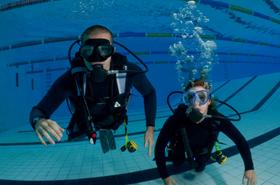
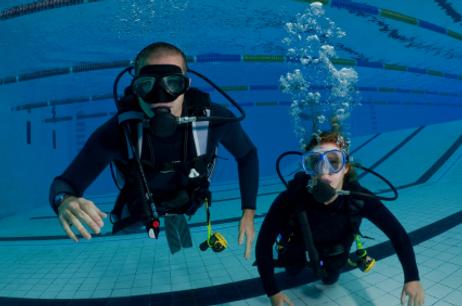
Earn Your Scuba Diving Certification at Your Local Community College

Updated
|
Earn Your Scuba Diving Certification at Your Local Community College
Dive into the world of scuba diving with exhilarating community college courses! Discover how students and community members alike can embark on an exciting journey to earn their scuba certification through top-notch programs designed for adventure seekers.

Are you interested in a new hobby that will open the sea's mysteries? Are you hoping to enrich your college experience with a unique and entertaining course? Whether you're interested in learning to scuba dive for recreational or educational reasons, community colleges across the country are qualified to provide students with the necessary skills, training, and practice to become certified divers. These courses are generally open to registered students and adult community members pursuing continuing education.

Indeed, scuba diving courses can be a fun and engaging opportunity to explore new underwater worlds!

How to Get Certified to Scuba Dive

Scuba divers must obtain a certification card to prove they completed a reputable training course. The most common certification agencies are PADI, NAUI, YMCA, SSI, and other local institutions. Often, community college campuses provide certification courses through one of these leading agencies.

The most common certification venue when enrolling in a scuba training class is an “open w" or” scuba" class. Once you complete this primary scuba course, you must pass all the tests and required dives before receiving official certification. Upon earning a certification card, a scuba diver never needs to re-enroll for training, but once this step is completed, you can maintain your certification status for life!

Most scuba courses require that all participants be in healthy physical shape. Participants should be able to swim at least 200 yards and float or tread water for at least 10 minutes without stopping. In addition to these standards,


. . .read more

How Community College Classes Can Improve Your Marriage

Updated
|
How Community College Classes Can Improve Your Marriage
Community college workshops and credit courses are improving marriages across the country. Learn about how you can take advantage of these great resources at your local community college.

Could being married help you earn better grades in college? Interestingly, studies have found that students who are married generally report higher grades and grade point averages.

According to the Research in Higher Education Journal, a study of college students “confirms earlier work regarding the positive influence of marriage on the scholastic achievement of community college students.” The study also found that married students tended to excel most significantly in programs such as Business Administration, Executive Secretarial, and Nursing Education.

While the causation relationship between marriage and good grades still remains unclear, community colleges are not wasting any time in helping their students benefit from the positive correlation! Many college campuses offer marital workshops and classes that help improve relationships, while other courses delve into the sociological underpinnings of marriage in our society.

Community Colleges Workshops that Foster Stronger Marriages

Through workshops and lectures, many community colleges specifically cater to students who are currently or planning to be married. For example, at Arapahoe Community College in Littleton, Colorado, couples can take a variety of non-credit workshops, such as “Before You Say ‘I do’ Marriage Education for Engaged Couples, "Four Hours to a Happier Relationship," "Is Anyone Listening to Me? Solving Communication Problems in Relationships,” and “Preparing for Your Empty Nest Marriage: Now That the Kids are Leaving.” Through these workshops, students learn about how to strengthen their relationships – and potentially even their grades in school!

On a broader basis,

. . .read more

Happier Families Start at Community College Parenting Courses

Updated
|
 Happier Families Start at Community College Parenting Courses
Your local community college is an excellent resource for free parenting classes. Take advantage of the learning opportunities and give your baby the best start in life.

Although most parents wish for manuals, young infants and children simply do not come with instruction manuals. Fortunately, community colleges nationwide offer excellent parenting classes to help parents stimulate a child's development and behavioral growth.

As all child development experts will support, the role of a parent in a child's earliest and most formative years is imperative; proactively seeking the best philosophies and strategies for optimal child rearing can help parents and children experience greater satisfaction and care.

To find out how your local community college parenting classes can help you and your family, consider some of the most popular and widely available opportunities at campuses nationwide.

This video offers a look at the parenting courses at South Puget Sound Community College.

Mt. San Jacinto Community College (MSJCC), California Campuses

As the San Diego News Network reports, Mt. San Jacinto Community College has gained much positive attention for its innovative parenting classes. Participants enjoy free classes and resources for improved parent-child relationships and child development by cooperating with Mt. San Jacinto-area campuses. Throughout the six-week course, participants will engage in sessions focusing on issues such as "From Power Struggles to Encouragement," "Challenges in Discipline," as well as other topics of exploration.

Led by parenting expert and author Sandi Schwartz provides parents with information based on her research and four decades of experience. Schwartz believes actively seeking solutions to parent-child

. . .read more

Why Community Colleges are Cutting Friday Classes

Updated
|
Why Community Colleges are Cutting Friday Classes
Learn about how budgetary constraints are prompting community colleges to only offer four-day school weeks.

While some community colleges are cutting costs by boosting tuition rates or reducing instructor positions, other campuses have found an alternative approach. In lieu of sacrificing community college resources, some schools are implementing summer programs that are only four days long.

Leaders of these programs assert that by closing the school one day early each week, the school will be able to save on common costs, such as electricity, water, air conditioning, security, and additional day-to-day expenses.

This new approach, however, is not taking effect without ruffling a few feathers. Opponents of this plan argue that both students and faculty will be overwhelmed with longer work hours that are crammed into a shorter time period. While leaders have not yet found the perfect solution, many community college students are awaiting the reports and results of these proposed schedule changes.

This video offers some suggestions for scheduling your class schedule.

The Four Day School Week

Community colleges have been inspired by how the corporate world has minimized their expenses in the face of a recession. To strengthen their bottom lines, many companies have offered their employees the option to work from home or work four days instead of the standard five. By allowing employees to complete their work in just four days, companies have discovered that their facility costs have dropped, while employees have also benefitted from saving money on fuel. This approach,

. . .read more

A Dazzling Degree: How to Pursue Jewelry Design at Your Local Community College

Updated
|
A Dazzling Degree: How to Pursue Jewelry Design at Your Local Community College
Learn about the dazzling jewelry programs and certificates that are available at your local community college campus.

For those who are artistically inclined, creative, and motivated, there are rewarding career options in the field of jewelry design. According to reports, a jewelry designer earns an average income of just under $29,000 in the first year of work! After just five years of work, a jewelry designer can begin to earn an average of approximately $54,000 per year—and potentially more. To begin an exciting and imaginative pathway in the field of jewelry design, students can start with programs at their local community college.

Jewelry Design Programs and Opportunities

Although many believe that the art of jewelry design simply involves aesthetic skills and training, this career actually incorporates technical understanding. For example, as inexperienced designers begin to craft their first pieces of jewelry, some of the pieces may be too heavy, may feel cumbersome to the wearer, or may not be made of a sustainable and durable material. Furthermore, some jewelry designers have learned to specialize in the creation of allergy-free jewelry, which is created with specific non-irritating materials.

Due to the industry’s technical demands, designers are often more successful when they have a trained background. With the rising interest in jewelry design careers, community colleges across the country are now offering both degree programs and individual courses to provide students with the essential skills to become successful in this field.


North Seattle Community College

Offering a Certificate in Jewelry Design, North Seattle Community College (NSCC) in Washington enjoys reputable

. . .read more

Recent Articles

Test Article, Image and Content
Test Test Test Test Test Test Test Test Test Test Test Test Test Test Test Test Test Test Test Test Test Test Test Test Test Test Test Test Test Test Test Test Test Test Test Test Test Test Test Test Test Test Test Test Test Test Test Test Test Test Test Test Test Test Test Test Test Test Test Test Test Test Test Test Test Test Test Test Test Test Test Test Test Test Test Test Test Test Test Test Test Test Test Test Test Test Test Test Test Test Test Test Test Test Test Test Test Test Test Test Test Test Test Test Test Test Test Test Test Test Test Test Test Test Test Test Test Test Test Test Test Test Test Test Test Test Test Test Test Test Test Test Test Test Test Test Test Test Test Test Test Test Test Test Test Test Test Test Test Test Test Test Test Test Test Test Test Test Test Test Test Test Test Test Test Test Test Test Test Test Test Test Test Test Test Test Test Test Test Test Test Test Test Test
Faith Formation Integrated Across Subject Areas
Explore faith formation integrated across subject areas and its impact on curriculum, student outcomes, and community colleges.
Parish-Based Governance Models in Catholic Schools
Explore parish-based governance models in Catholic schools and their impact on leadership, funding, and community colleges.

Courses in College

REMEDIAL EDUCATION
60% of community college students need remedial courses. This section covers the classes and new developments to help students who need remedial coursework. Learn why the gap exists, how schools are combatting it and what you can do to avoid remedial classes. Get tips on mastering college math, learn what you can do to prevent repeating a class and hear what the experts have to say about remedial class placement.
KIDS AND TEENS
Community college is not just for adults. Learn about all the programs available to children and teens too. From aiding high school dropouts to ramped up summer school programs, community colleges work hard to encourage the pursuit of higher education to students of all ages.
ONLINE COURSES
Online classes give you the flexibility to learn off-campus, often at times most convenient for your schedule. Identify 10 degrees you can earn online, weigh the pros and cons of online education and find out how you can take online classes for free.
SUPPORT FOR BUSINESSES
Local business are taking advantage of special training programs at community colleges. From OSHA training to a collaboration with Goldman Sachs, community colleges are training employees for small and large businesses across the country.
FUN & ELECTIVE CLASSES
Community colleges offer a gamut of fun and interesting classes, and we give ideas that may strike inspiration for your elective choices. Learn homesteading skills, study paranormal investigating, or earn a scuba diving certificate all at a community college near you. This sections identifies some of the fun non-credit courses available at your local campus.
CONTINUING EDUCATION
Community colleges are filled with continuing education opportunities. Whether you are looking for a resume booster, new skills to earn a promotion or want to earn your degree while incarcerated, community college may be a good choice for you.