Updated
|
How Community College Campuses are Preparing for the H1N1 Virus
Learn about how community colleges are putting plans in place to prevent and combat the spread of H1N1 on campus.

With the H1N1 spreading across college campuses from Washington to Massachusetts, community colleges are taking action to shelter their students from any potential outbreak. As reported by CNN, according to a presidential advisory panel, the potential spread of the virus could contribute to as many as 90,000 U.S fatalities this season. Expected to break out in the fall, experts estimate that 30 to 50 percent of the U.S. population may become infected.

Advisors further predict that schools and shared community areas pose the greatest threats for contamination and contagiousness. To prepare for an array of plausible H1N1-related challenges, community college leaders are avidly planning to confront the virus on campus.

Community College Preparation for the H1N1 Virus

As reported by the Gazette News, Prince George Community College (PGCC), located in Largo, Maryland, is one of many community colleges making preparations against the H1N1 virus. Since Prince George Community College enrolls more than 40,000 students, leaders are concerned that the large number of students enclosed in shared common areas can lead to rapid virus outbreaks. To proactively address the H1N1 threats, “The college has a pandemic team in place composed of about nine people from different departments.”

PGCC has developed guidelines to help the school employ specific responses for an array of potential H1N1 campus issues. For example, the leaders have established regulations for when and if the campus should shut down amidst an H1N1 outbreak and how many students should have confirmed cases before


. . .read more

Should Community Colleges Allow Undocumented Immigrants to Enroll?

Updated
|
Should Community Colleges Allow Undocumented Immigrants to Enroll?
Learn about the controversy surrounding community colleges' admission policies regarding undocumented immigrants.

Community colleges were intended to help all students access higher education, regardless of socioeconomic or geographical constraints. Subsequently, some community colleges have adjusted their admission policies, allowing undocumented immigrants to enroll on campus.

However, these changes have been met with great controversy, especially during a time when community colleges are facing record high enrollment rates. In particular, North Carolina has been battered with an array of protestors who argue that community colleges are already struggling to provide for its massive number of documented, legal students. In light of these enrollment demands, how can community colleges accommodate undocumented students?
In this video, an undocumented student shares how she was still able to pay for college despite not being eligible for federal aid.
As the debate continues to rage on both sides, some experts predict that community colleges across the country will soon feel pressured to permit undocumented immigrants into their classrooms.
Undocumented Students: The Heated Debate
Examining these controversial changes to community college policies in North Carolina, WRAL News reports that all community colleges in the state must accept qualified illegal immigrants if the applicants meet all of the admission guidelines. Prior to this new policy, college officials were required to reject any undocumented students, even if the applicants were over the age of 18 and had earned a high school diploma in the United States.
How did the policy

. . .read more

The Benefits of Community College Minority Mentoring Programs

Updated
|
The Benefits of Community College Minority Mentoring Programs
Learn about how minority mentorship programs at community colleges are improving academic performance and graduation rates, as well as providing a medley of benefits.

While all mentoring programs help improve student performance and graduation rates, some community colleges are finding that minority mentorship programs are even more beneficial. Colleges across the country are celebrating the outstanding results achieved through the collaborative efforts of on-campus minority mentoring programs. As the Education Resources Services Center articulates, “Mentoring is a process that can increase the retention of minority students, with larger numbers graduated and hired for faculty positions.”

To discover the benefits of minority mentoring opportunities, consider what some of the top-performing organizations have been able to achieve with their local community college support.

In their paper, Institutionalizing Mentoring in Community Colleges, Dr. Robin Phelps-Ward and Dr. Amanda O. Latz make the point that "Opportunities for institutionalized mentoring in community colleges have the potential to manifest in the promotion and tenure process, faculty development seminars, student recruitment and admissions procedures, and throughout curriculum development. However, colleges must make a concerted effort to weave and explicitly communicate mentoring as a value through mission and vision statements, strategic goals and outcomes, and even course objectives."

This video reports on the minority mentoring initiative at Montgomery County Community College.

Examining the College Student Spectrum

According to the Community College Review-Journal, diversity among community college student populations is constantly shifting. In fact, recent US Census Bureau reports show that 42.3 percent of African Americans enrolled in college programs

. . .read more

Why Congress Has Eliminated Community College Support for Convicted Criminals

Updated
|
Why Congress Has Eliminated Community College Support for Convicted Criminals
Learn about how some convicted criminals abused community colleges' financial aid programs and why Congress has decided to prohibit criminals from being eligible for future aid.

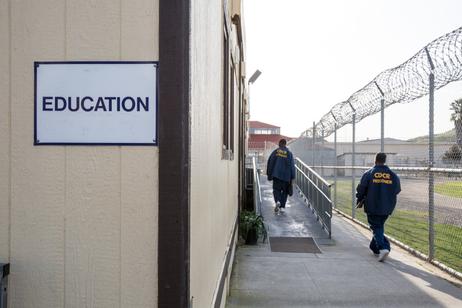
While many community colleges have educational incentives to provide reform for convicted criminals, some political leaders are taking an opposing stance. According to recent reports from the San Francisco Chronicle, “Some of the nation's worst sex offenders will no longer be eligible to receive generous educational financial aid packages while they are confined in treatment centers under a bill approved by Congress.”

As political leaders and college presidents strive to balance their budgets amidst a struggling economy, one of the first programs to be eliminated is the financial aid and grants that were available for individuals guilty of serious crimes.

This TEDTalk looks at the issue of prisoner education.

Fighting for Reform

In exploring the recent amendments denying convicted criminals of free tuition and grants, one must first understand how these free college opportunities were even initially created. In truth, allowing convicted criminals to gain access to free publically funded courses was a mere oversight in a much larger educational overhaul. As The Hoya, Georgetown University’s central newspaper, explains, the House of Representatives passed a bill to reauthorize the Higher Education Act in 2008. This act was reinstated in order to provide individuals with enhanced financial aid benefits, and the act allowed individuals to access aid with fewer obstacles and hassles. As a result of this bill, students were able to apply for and receive federally funded student aid Pell Grants throughout the entire year.

Unfortunately, while most students found the

. . .read more

Stuck on a Waiting List? How Community College Students Can Combat College Admission Freezes

Updated
|
Stuck on a Waiting List? How Community College Students Can Combat College Admission Freezes
More and more of today's community college students find themselves on waiting lists thanks to budget cuts. Learn about strategies you can take to get yourself off of waiting lists and into class.

Historically, when the economy sputters, community college enrollment rates rise. In facing today’s growing student population, some campuses are struggling under the increased demand. As a result, some community college students have been forced to halt their academic pursuits, finding themselves placed on waiting lists.

Being on a community college’s waiting list can slow down a student’s anticipated graduation date, as well as limit career training. If you find yourself on a waiting list, there are measures you can take to overcome frustrating admission freezes.
What is a College Wait List?

Waitlists, which put students in a “line” of acceptance after a school or program’s maximum capacity has been reached, can delay a student’s pursuit of a certification or degree for multiple semesters.
Some programs may have longer waiting lists than others. For example, as Hudson Valley, Community College in Troy, New York reveals, “The size of the program and departmental projections will determine the number of students on a waitlist. If a student is not accepted from the waitlist, he/she will be notified shortly after the start of the semester.”
Protesting Against Waiting Lists
According to the Union-Tribune, some California community college students have fought against wait list frustrations through organized protests. For example, protesters gathered at California City College, located in San Diego, to fight against the state’s budget

. . .read more

Recent Articles

Test Article, Image and Content
Test Test Test Test Test Test Test Test Test Test Test Test Test Test Test Test Test Test Test Test Test Test Test Test Test Test Test Test Test Test Test Test Test Test Test Test Test Test Test Test Test Test Test Test Test Test Test Test Test Test Test Test Test Test Test Test Test Test Test Test Test Test Test Test Test Test Test Test Test Test Test Test Test Test Test Test Test Test Test Test Test Test Test Test Test Test Test Test Test Test Test Test Test Test Test Test Test Test Test Test Test Test Test Test Test Test Test Test Test Test Test Test Test Test Test Test Test Test Test Test Test Test Test Test Test Test Test Test Test Test Test Test Test Test Test Test Test Test Test Test Test Test Test Test Test Test Test Test Test Test Test Test Test Test Test Test Test Test Test Test Test Test Test Test Test Test Test Test Test Test Test Test Test Test Test Test Test Test Test Test Test Test Test Test
Faith Formation Integrated Across Subject Areas
Explore faith formation integrated across subject areas and its impact on curriculum, student outcomes, and community colleges.
Parish-Based Governance Models in Catholic Schools
Explore parish-based governance models in Catholic schools and their impact on leadership, funding, and community colleges.