Overview

What is a community college and why are more students turning to them? Who are some of the most famous community college graduates? Here you’ll find the answers to these questions and more.

View the most popular articles in Overview:

The Hidden Benefits of Starting at a Community College

Updated
|
The Hidden Benefits of Starting at a Community College
Explore the hidden benefits of starting at a community college instead of a four-year university, including savings, transfer pathways, and career flexibility.

For many students and families planning for higher education, the assumption has long been straightforward: a four-year university is the “default” path after high school. However, in 2026, that assumption is being increasingly challenged. Rising tuition costs, evolving transfer agreements, and more flexible academic pathways are prompting students to reconsider starting at a community college instead of a four-year university as a strategic and financially sound beginning.

While community colleges are often associated with affordability alone, that is only part of the story. In reality, they offer a range of hidden benefits that extend far beyond cost savings, including academic flexibility, improved transfer outcomes, stronger career readiness, and reduced long-term financial risk.

This article explores those lesser-known advantages and why community colleges are becoming a first-choice option rather than a fallback.

A More Affordable Entry Point to Higher Education

The most widely recognized advantage of community college is affordability, but its impact is often underestimated.

According to the National Center for Education Statistics, tuition and fees at public two-year institutions remain significantly lower than at public four-year universities, even as costs rise across the board. You can review national tuition trends through the NCES Fast Facts database.

Starting at a community college instead of a four-year university can reduce total degree costs by tens of thousands of dollars, especially for students who complete their first two years locally before transferring.

Key financial advantages include:

  • Lower tuition per credit hour
  • Reduced housing and living expenses
  • Lower
. . .read more

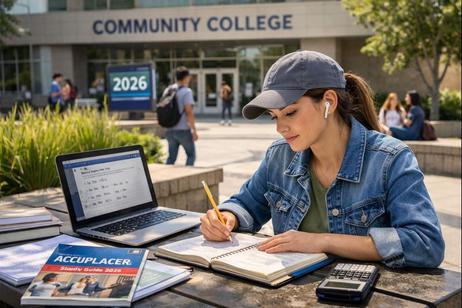
Preparing for Placement Tests in 2026: Student Guide

Updated
Preparing for Placement Tests in 2026: Student Guide
Preparing for Placement Tests in 2026, what students, parents, and educators need to know about formats, prep strategies, and placement changes.

Preparing for Placement Tests in 2026: What Students Need to Know

Preparing for Placement Tests in 2026 has become a central concern for students entering community colleges across the United States. As placement testing continues to evolve, students, parents, and educators must understand how placement tests work in 2026, what has changed in recent years, and how students can prepare effectively. Preparing for Placement Tests in 2026 is no longer just about test-taking skills; it now involves academic history, advising, and multiple measures that reflect a student’s broader readiness for college-level work.

Community colleges increasingly rely on placement systems designed to support student success, reduce unnecessary remediation, and accelerate progress toward degrees and certificates. Preparing for Placement Tests in 2026 requires awareness of these trends, along with practical strategies that help students start college on the right academic path.

What Are Placement Tests and Why They Matter in 2026

Placement tests help colleges determine the appropriate starting level for students in math, English, and sometimes reading or English as a Second Language. Preparing for Placement Tests in 2026 is important because placement decisions affect course selection, time to graduation, and overall college costs.

Most community colleges use placement tools to answer key questions:

• Is a student ready for college-level math and English
• Does a student need additional academic support
• Which courses best match a student’s skills and goals

Preparing for Placement Tests in 2026 is particularly important because misplacement can

. . .read more

How Community Colleges Support First-Generation Students

Updated
|
How Community Colleges Support First-Generation Students
A detailed look at how community colleges help first-generation students thrive through academic, financial, and wraparound support.

How Community Colleges Support First-Generation Students

Community colleges have long played a crucial role in expanding access to higher education. In 2025, their mission is even more urgent as more first-generation students seek affordable, flexible pathways to degrees and careers. These institutions understand that first-generation students arrive with determination, but often without the academic, financial, and cultural knowledge that many continuing-generation learners take for granted.

This article examines how community colleges support first-generation students through targeted services, structured guidance, and inclusive programming. It also explains how parents and educators can help first-generation students navigate the transition to college.

To align with search intent and transparency, this article includes links to authoritative resources such as Community College Review, Public School Review, and College Scorecard.

Why Support for First-Generation Students Matters

First-generation students often balance school with work and family responsibilities. They may be unfamiliar with financial aid processes, course sequencing, or available campus resources. Community colleges recognize these needs and build systems that allow first-generation students to persist from their first semester to graduation.

Common challenges for first-generation students include:

  • Limited exposure to higher education vocabulary, expectations, and norms

  • Difficulty navigating academic bureaucracy, including placement, advising, and registration

  • Financial pressures requiring part-time enrollment

  • Limited family support in academic decision making

. . .read more

Community College vs University — What’s the Difference (2025)

Updated
|
Community College vs University — What’s the Difference (2025)
Explore the key differences between community colleges and universities in 2025—costs, outcomes, demographics, transfer paths, and strategic

Community College vs University: What’s the Difference?

When students and families contemplate postsecondary education in 2025, one of the recurring questions is whether to begin at a community college or enroll directly in a university. On the surface, both pathways lead to degrees and career opportunities—but beneath that, there are meaningful distinctions in cost, structure, student population, and outcomes. This article updates common comparisons with the latest data, policies, and real-world examples to help prospective students, parents, and educators make better-informed decisions.

What Is a Community College?

Definition & mission. Community colleges (often known as junior or two-year colleges) offer associate degrees, certificates, workforce training, remedial courses, and often serve as gateways for transfer to four-year institutions. Their mission is dual: provide accessible postsecondary education and respond to local workforce needs (e.g. health, trades, IT).

Typical programs. Students often complete general education (math, English, natural sciences) or specialized vocational courses. Many also enroll part-time or balance studies with full-time jobs or family responsibilities.

Student demographics & scale (2025).

  • Community college students account for approximately 39 % of all U.S. undergraduates as of 2025.

  • In Spring 2025, community colleges saw one of the largest enrollment upticks among postsecondary institutions (+5.4 %) — part of a broader +3.2 % increase in postsecondary enrollment overall.

  • Nearly half of all Hispanic undergraduates

. . .read more

Community Colleges: A to Z – 2025 Guide

Updated
Community Colleges: A to Z – 2025 Guide
Explore the A–Z of community colleges in 2025: programs, affordability, pathways, and innovations for educators and parents.

Community Colleges: A to Z (2025 Edition)

This A–Z guide offers parents and educators a clear, comprehensive look at what community colleges offer in 2025—from Associate Degrees to Student Supports—reflecting the latest data, innovations, and real-world examples.

A – Associate Degrees

An associate degree typically spans two years (around 60–70 credits). It can serve as a terminal credential for immediate entry into the workforce or a launchpad for a transfer to a four-year institution. In 2025, these degrees remain central to the mission of community colleges, which continue to be key providers of both workforce mobility and affordable higher education.

B – Budget-Friendly Education

In 2025, community colleges continue to offer the most affordable route into higher education, with typical in-district tuition averaging around $3,600/year and in-state rates around $5,100/year, compared to tens of thousands at four-year colleges. Programs such as California’s College Promise allow eligible students to attend tuition-free. Nationally, over a dozen states now offer similar aid or tuition waiver programs, reinforcing the "budget-friendly" advantage of community colleges.

C – Career Technical Education (CTE)

CTE programs are more vital than ever, equipping students for roles in fields like healthcare, cybersecurity, advanced manufacturing, and AI. These programs often culminate in certificates or associate degrees developed in collaboration with local employers, ensuring key alignment between skills taught and regional labor market demands.

D – Dual Enrollment

High school students across the U.S. are increasingly enrolling in college-level courses through dual enrollment, earning credits while still in high

. . .read more

Recent Articles

Test Article, Image and Content
Test Test Test Test Test Test Test Test Test Test Test Test Test Test Test Test Test Test Test Test Test Test Test Test Test Test Test Test Test Test Test Test Test Test Test Test Test Test Test Test Test Test Test Test Test Test Test Test Test Test Test Test Test Test Test Test Test Test Test Test Test Test Test Test Test Test Test Test Test Test Test Test Test Test Test Test Test Test Test Test Test Test Test Test Test Test Test Test Test Test Test Test Test Test Test Test Test Test Test Test Test Test Test Test Test Test Test Test Test Test Test Test Test Test Test Test Test Test Test Test Test Test Test Test Test Test Test Test Test Test Test Test Test Test Test Test Test Test Test Test Test Test Test Test Test Test Test Test Test Test Test Test Test Test Test Test Test Test Test Test Test Test Test Test Test Test Test Test Test Test Test Test Test Test Test Test Test Test Test Test Test Test Test Test
Faith Formation Integrated Across Subject Areas
Explore faith formation integrated across subject areas and its impact on curriculum, student outcomes, and community colleges.
Parish-Based Governance Models in Catholic Schools
Explore parish-based governance models in Catholic schools and their impact on leadership, funding, and community colleges.