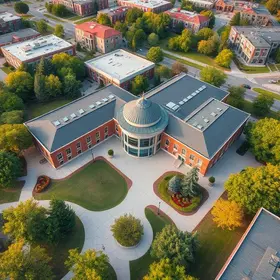
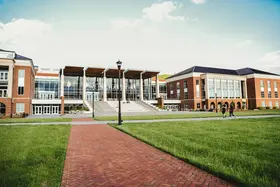
- William Peace University is a private college in Raleigh, North Carolina, United States. Affiliated with the Presbyterian Church, it offers undergraduate degrees in more than 30 majors and the School of Professional Studies offers accelerated bachelor's degrees that are online or hybrid for working adults.
School Highlights
William Peace University serves 1,071 students (59% of students are full-time).
The college's student-teacher ratio of 6:1 is lower than the state community college average of 13:1.
Minority enrollment is 46% of the student body (majority Black), which is less than the state average of 48%.
Quick Facts (2026)
- Enrollment: 1,071 students
- Private-state tuition: $24,650
- Acceptance Rate: 52%
- Student-teacher ratio: 6:1
- Minority enrollment: 46%
- Source: Integrated Postsecondary Education Data System (IPEDS)
Top Rankings
William Peace University ranks among the top 20% of public schools in North Carolina for:
Category
Attribute
School Resources
School Overview
The teacher population of 166 teachers has stayed relatively flat over five years.
William Peace University
(NC) Community College Avg.
Carnegie Classification
Baccalaureate Colleges: Diverse Fields
Associate's Colleges: Mixed Transfer/Career & Technical-High Nontraditional
Institution Level
Four or more years
At least 2 but less than 4 years
Institution Control
Private not-for-profit
Public
Total Faculty
166 staff
256 staff
School Calendar
Student Body
The student population of William Peace University has grown by 6% over five years.
The student-teacher ratio of 6:1 has stayed the same over five years.
The William Peace University diversity score of 0.63 is less than the state average of 0.66. The school's diversity has stayed relatively flat over five years.
Total Enrollment
1,071 students
2,579 students
Student-Teacher Ratio
6:1
13:1
# Full-Time Students
630 students
766 students
# Part-Time Students
441 students
1,813 students
# Enrollment Undergraduate
107 students
316 students
# Full-Time Undergraduate Students
630 students
766 students
# Full-Time Graduate Students
n/a
22 students
# Part-Time Undergraduate Students
441 students
1,990 students
# Part-Time Graduate Students
n/a
3 students
Total Dormitory Capacity
446 students
717 students
% American Indian/Alaskan
n/a
1%
% Asian
3%
3%
% Hispanic
11%
13%
% Black
25%
21%
% White
54%
52%
% Hawaiian
n/a
1%
% Two or more races
4%
3%
% Non Resident races
1%
1%
% Unknown races
2%
5%
Diversity Score
0.63
0.66
College Completion Rate (Students who graduate in less than 4 years)
n/a
37%
College Completion Rate (Students who graduate in 4 years or more than 4 years)
0.4286%
43%
Average Graduate Earnings (10 Years)
$36,800
$27,200
Tuition and Acceptance Rate
The private state tuition of $24,650 is more than the state average of $19,438. The private state tuition has declined by 24% over four years.
Private State Tuition Fees
$24,650
$19,438
% Students Receiving Some Financial Aid
99%
82%
Median Debt for Graduates
$24,000
$11,865
Median Debt for Dropouts
$9,500
$5,846
Acceptance Rate
52%
82%
SAT Reading
572
543
SAT Math
583
503
ACT Composite
24
23
ACT English
22
22
ACT Math
23
20
Source: 2024 (or latest year available) Integrated Postsecondary Education Data System (IPEDS) , School Administrators
School Notes
- School Mascot: Pacer
Frequently Asked Questions
How much does William Peace University cost?
William Peace University's private state tuition is approximately $24,650.
What schools are William Peace University often compared to?
William Peace Universityis often viewed alongside schools like Wake Technical Community College by visitors of our site.
What is the acceptance rate of William Peace University?
The acceptance rate of William Peace University is 52%, which is lower than the state average of 82%.
What is William Peace University's ranking?
William Peace University ranks among the top 20% of community college in North Carolina for: Percent of students receiving financial aid.
In what neighborhood is William Peace University located?
William Peace University is located in the Downtown neighborhood of Raleigh, NC.
Recent Articles

Test Article, Image and Content
Test Test Test Test Test Test Test Test Test Test Test Test Test Test Test Test Test Test Test Test Test Test Test Test Test Test Test Test Test Test Test Test Test Test Test Test Test Test Test Test Test Test Test Test Test Test Test Test Test Test Test Test Test Test Test Test Test Test Test Test Test Test Test Test Test Test Test Test Test Test Test Test Test Test Test Test Test Test Test Test Test Test Test Test Test Test Test Test Test Test Test Test Test Test Test Test Test Test Test Test Test Test Test Test Test Test Test Test Test Test Test Test Test Test Test Test Test Test Test Test Test Test Test Test Test Test Test Test Test Test Test Test Test Test Test Test Test Test Test Test Test Test Test Test Test Test Test Test Test Test Test Test Test Test Test Test Test Test Test Test Test Test Test Test Test Test Test Test Test Test Test Test Test Test Test Test Test Test Test Test Test Test Test Test

Faith Formation Integrated Across Subject Areas
Explore faith formation integrated across subject areas and its impact on curriculum, student outcomes, and community colleges.

Parish-Based Governance Models in Catholic Schools
Explore parish-based governance models in Catholic schools and their impact on leadership, funding, and community colleges.