Financing

Paying for community college can be overwhelming. Use the tools, resources and tips within this section to help you finance your education. From student loans to scholarships, we’ll cover the most common financial aid options available to community college students. Get money saving tips, learn more about Pell grants, and explore the federal work-study program.

View the most popular articles in Financing:

Federal Work Study Programs: Pros and Cons

Updated
|
Federal Work Study Programs: Pros and Cons
Learn about the benefits of a work study program for community college students.

Although community colleges are significantly more affordable than four-year institutions, tuition, administration fees, living costs, and book expenses can add up quickly. Unfortunately, according to 2008 research conducted by the Project on Student Debt, one out of 10 community college students cannot access federal student loans. For these students, Pell Grants often become the primary source of education funding.

However, if your community college offers federal student loans – which the majority of large, public, non-rural campuses do – then you may want to consider federal work-study (FWS) programs, which are also known as Formula Grants.

Unlike other forms of financial aid that are strictly given as grants and loans, the work-study program helps fund your education through your working efforts. The federal government provides your community college with specific grants, and then your campus works with community and nonprofit organizations to create job opportunities for qualified students. You are paid an hourly wage for your work, which is typically higher than the minimum wage.

The advantages of work-study programs

Garnering real-life experience

Attending community college prepares you for the real world, and with a work-study program, you can take that preparation to the next level. Due to the supply of work-study jobs, you are essentially “guaranteed” a job if you qualify for the FWS program. Due to employers' significant incentives, you are more likely to be hired for your job of choice under the FWS program.

Graduating from college with a degree is no longer sufficient for
. . .read more

The College Cost Reduction and Access Act of 2007

Updated
|
The College Cost Reduction and Access Act of 2007
Learn more about The College Cost Reduction and Access Act of 2007 ("CCRAA" or the "Act"), which was enacted to make college more affordable for low- and moderate-income students by phasing in increases in government grants.

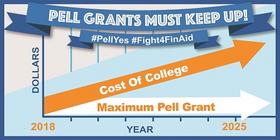
The College Cost Reduction and Access Act of 2007 ("CCRAA" or the "Act") was enacted to make college more affordable for low- and moderate-income students by phasing in increases in government grants. For example, in 2007, the maximum Pell Grant was limited to $4,310, whereas the maximum for 2012 was $5,400. The Act also decreases interest rates on government-backed loans and even cancels outstanding debt in certain situations. The favorable terms for grants and loans represent an important step in achieving universal access to higher education. This report examines the problem of inadequate college assistance, the enactment of the Act, the major provisions affecting college student borrowers, and the funding of the new benefits.

The Rising Cost of Higher Education Leads to Massive Student Loan Debt

Federal student aid has not kept pace with the escalating cost of higher education and the reduced state support of public colleges and universities. As a result, some students decide that a college education is out of their reach. Other students and their families borrow more to pay tuition and other expenses. Students who graduate with unpaid loans are burdened with thousands of dollars of debt that they must usually begin repaying shortly after graduation. Studies show that about 39 percent of college graduates under 35 say paying off their loans will take more than ten years. For graduates with low- or moderate-paying jobs, the monthly principal and interest due may far exceed their ability to pay.

Attending a community

. . .read more

Community College Scholarships

Updated
|
Community College Scholarships
Learn how scholarships work and how they can help pay for your community college education.

A scholarship is a great way to pay for part or all of your community college education. Whether you have a special talent, have outstanding grades, are a member of a minority group, or have a financial need, there's a good chance that you may qualify for one or more scholarships that will help you pay for your education. There are a number of different types of scholarships available. For example, some scholarships are awarded to students for volunteering and for performing community service. Other scholarships aim to help students going into specific areas of study, such as education. Still other scholarships seek to help students who have experienced some kind of hardship, such as the loss of a job.

Many scholarship sponsors look at various outstanding qualifications as their award criteria, so you don't have to be a straight-A student to qualify for some scholarships. In fact, there are a number of unconventional scholarships out there, such as ones for creativity, charity work, as well as skills in writing, photography, or dance. Exceptional scholars and average students alike should consider applying to those scholarships that best fit their grades, needs and talents.

Merit-Based Scholarships

Merit-based scholarships are awarded to students with a track record of outstanding academic performance. In order to be considered for a merit-based scholarship, a student must meet certain requirements such as a minimum GPA or minimum standardized test scores. This type of scholarship tends to be highly competitive, however, some community colleges offer

. . .read more

Community College Loans

Updated
|
Community College Loans
Learn how college learns work and how you can use them to finance your education.

Embarking on a community college experience can be overwhelming for many students. After all, rising costs of education can quickly eat away at your savings or your earnings from a part-time job. For this reason, a loan may be just the answer you've been looking for. An educational loan can help you pay for community college, allowing you to work towards your degree without the added stress of wondering how you will pay for it. A student loan can be repaid over time, once you've completed your education.

It is important to keep in mind that borrowing money is expensive, even if it is in the form of a government-subsidized loan at a relatively low-interest rate. If you have any money saved or are able to work and attend community college part-time, these may be some great options to avoid having a large amount of debt upon graduation. Only you, your parents, and possibly a financial advisor can determine the borrowing/savings scenario that is ideal for you.

Types of Loans

There are a number of different education loans available, each one uniquely tailored to address the needs of certain individuals. When the federal government offers loans to students, these loans usually have low- interest rates. The Stafford Loan is the main vehicle by which the government loans money to students. Stafford Loans are further broken down into two subcategories:

  • Subsidized - In this case, the interest on your loan is paid by the government while you are still
. . .read more

Community College Grants Guide (2026): Federal, State & Local Aid Options

Updated
|
Community College Grants Guide (2026): Federal, State & Local Aid Options
Explore updated 2026 community college grants, including Pell Grants, state aid, and new funding trends. Learn how to qualify and maximize free college money.

This article has been updated to reflect 2026 data and recent developments.

Community college grants remain one of the most effective ways to reduce or eliminate the cost of higher education. Unlike loans, grants do not need to be repaid, making them especially valuable for students seeking affordable pathways to degrees or certificates.

In 2026, grant funding continues to evolve, with expanded eligibility discussions, increased federal investment, and new workforce-focused initiatives shaping how students pay for community college.

What Are Community College Grants?

Community college grants are need-based or merit-based financial aid awards that help cover tuition, fees, and sometimes living expenses.

They typically come from:

  • Federal government programs
  • State education agencies
  • Colleges themselves
  • Private organizations and nonprofits

Most students begin by completing the FAFSA, which determines eligibility for federal and many state grants.

Federal Grants for Community College Students

Pell Grants (Largest Source of Aid)

The Federal Pell Grant remains the cornerstone of community college funding.

  • Maximum award (2025–2026): up to $7,395 annually
  • Over $33 billion distributed to more than 6.3 million students in 2024
  • Roughly 25% of all community college students receive Pell Grants

Pell Grants are awarded based on financial need, household income, and enrollment status.

Community colleges serve a high proportion of low-income students, which is why these institutions receive a significant share of Pell funding. About 1.6 million community college students receive Pell Grants annually.

👉 Learn more about affordability in our guide to https://www.communitycollegereview.com/avg-tuition-stats/national-data

Federal Supplemental Educational Opportunity Grants (FSEOG)

FSEOG provides additional

. . .read more

Recent Articles

Test Article, Image and Content
Test Test Test Test Test Test Test Test Test Test Test Test Test Test Test Test Test Test Test Test Test Test Test Test Test Test Test Test Test Test Test Test Test Test Test Test Test Test Test Test Test Test Test Test Test Test Test Test Test Test Test Test Test Test Test Test Test Test Test Test Test Test Test Test Test Test Test Test Test Test Test Test Test Test Test Test Test Test Test Test Test Test Test Test Test Test Test Test Test Test Test Test Test Test Test Test Test Test Test Test Test Test Test Test Test Test Test Test Test Test Test Test Test Test Test Test Test Test Test Test Test Test Test Test Test Test Test Test Test Test Test Test Test Test Test Test Test Test Test Test Test Test Test Test Test Test Test Test Test Test Test Test Test Test Test Test Test Test Test Test Test Test Test Test Test Test Test Test Test Test Test Test Test Test Test Test Test Test Test Test Test Test Test Test
Faith Formation Integrated Across Subject Areas
Explore faith formation integrated across subject areas and its impact on curriculum, student outcomes, and community colleges.
Parish-Based Governance Models in Catholic Schools
Explore parish-based governance models in Catholic schools and their impact on leadership, funding, and community colleges.

Financing

FINANCING BASICS
Build the foundation needed to navigate the community college financial aid system. Learn which schools are the most affordable, get money tips on reducing college costs, and explore the latest initiatives to make community colleges even more accessible.
TUITION
This section will help you prepare for the costs of attending community college and any future increases. Explore pricing plans, learn where you may be able to attend community college tuition-free, and examine the latest initiatives to make higher education more affordable.
FINANCIAL AID
Our articles will provide you with the tools and resources needed to make sure you are qualifying for all the financial aid available, as well as maintaining your aid throughout your college career. Get the latest news on student loan interest rates, learn what to do when your financial aid is late, and explore all of your financial aid options.
SAVING MONEY
This section is full of money saving tips for community college students. From free textbooks to finding affordable childcare, we’ll provide you with a wealth of information on keeping college affordable.
GRANTS & SCHOLARSHIPS
There's nothing better than free money, and these articles can help you get grants and scholarships for your community college education. Acquire information on Pell grants and why you should take advantage of them, learn how you can earn money through community college writing and get the latest news on scholarships and funding.