Updated
|
Gap Year Guide for Graduating Seniors | 2026 Update
Updated insights for parents on gap years in 2026, covering trends, costs, deferrals, planning tips, and whether a gap year makes sense for your student.

Should Graduating Seniors Consider a Gap Year?

As graduating seniors and their families plan for the transition to college, careers, or other post-graduation paths, the idea of a gap year remains a compelling alternative to immediate enrollment. With evolving trends in higher education, rising costs, and shifting student goals in 2026, this article updates the key facts, risks, benefits, and practical considerations for parents helping their teens decide whether a gap year is right for them.

What Is a Gap Year?
A gap year is a planned period of purposeful activity taken between high school and college or other formal education. Activities vary widely, including travel, work, internships, volunteering, community service, or skill-building programs. While the practice is far more common in countries such as the United Kingdom or Australia, it has grown in awareness in the United States and is increasingly supported by some colleges and universities.

How Many Students Take a Gap Year?
Unlike college enrollment, there is no central federal data source that measures gap year participation in the U.S., but multiple indicators reflect current patterns. Estimates suggest that tens of thousands of U.S. students take gap years annually, with participation often returning to pre-pandemic levels after a brief spike during COVID-related disruptions. Survey data from a range of programs and high school counselors finds that roughly 2 to 3 percent of graduating seniors plan to take a gap year, with private schools reporting slightly higher rates than public schools.

Why Families Are
. . .read more

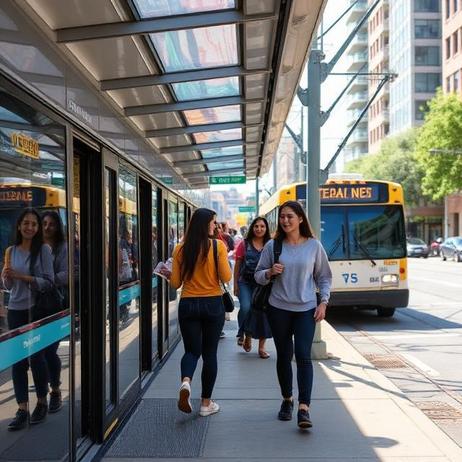
Transportation Challenges for Community College Students in 2026

Updated
|
Transportation Challenges for Community College Students in 2026
Explore transportation challenges for community college students in 2026 and affordable solutions including transit passes, micro-mobility, and hybrid learning.

Transportation Challenges for Community College Students: Affordable Solutions in 2026

Transportation challenges for community college students remain one of the most persistent and underexamined barriers to college access and completion. In 2026, rising housing costs, expanding suburban campuses, and continued enrollment growth have made transportation challenges for community college students more complex than ever. For many learners, transportation challenges for community college students directly affect attendance, academic performance, and retention.

Community colleges enroll nearly half of all undergraduate students in the United States, many of whom balance school with work and family responsibilities. Transportation challenges for community college students are especially acute because these institutions often serve older students, first-generation learners, and students from lower-income households. Addressing transportation challenges for community college students is now a priority for campus leaders, policymakers, and regional transit agencies.

This article examines the transportation challenges for community college students in 2026 and highlights affordable, scalable solutions that colleges are adopting nationwide.

Why Transportation Challenges for Community College Students Persist

Transportation challenges for community college students differ from those faced by students at residential four-year institutions. Most community college students commute, often long distances, using a mix of personal vehicles, public transit, and informal ride arrangements.

Key factors driving transportation challenges for community college students include:

  • Limited public transit routes serving suburban or rural campuses

  • Rising fuel, insurance, and vehicle maintenance costs

. . .read more

January-Start Students, Credit Load and Financial Aid

Updated
|
January-Start Students, Credit Load and Financial Aid
What January-start students should know about credit load requirements and financial aid eligibility in 2026.

What January-Start Students Should Know About Credit Load & Financial Aid Eligibility

January-start students are a growing population at community colleges nationwide. Whether enrolling after a midyear move, returning from work or military service, or starting college later than planned, January-start students often face different academic and financial aid considerations than fall enrollees.

Understanding how credit load affects financial aid eligibility is critical for January-start students. Missteps in course selection can delay aid, reduce award amounts, or affect future eligibility. With updated federal guidance in place for the 2025–2026 and 2026–2027 academic years, January-start students should approach enrollment with a clear plan.

This guide explains how credit load works, how financial aid eligibility is calculated, and what January-start students can do to protect their funding.

Why Credit Load Matters for January-Start Students

For January-start students, credit load determines whether financial aid is disbursed at full, partial, or minimal levels. Most federal and state aid programs are tied to enrollment intensity, not simply admission status.

January-start students often enroll in the spring term as part of the same academic year that began in the fall. That timing can affect remaining eligibility for grants and loans already partially used by fall enrollees.

Key reasons credit load matters for January-start students include:

  • Federal Pell Grant awards are prorated by enrollment level.

  • Federal student loans require minimum half-time enrollment.

. . .read more

5 Key Community College Trends Parents Should Know in 2026

Updated
|
5 Key Community College Trends Parents Should Know in 2026
Explore major 2026 community college trends including enrollment changes, costs, career programs, and affordability for parents planning college decisions.

Introduction

As families plan for college in 2026, community colleges continue to evolve and play a critical role in American higher education. These two‑year institutions serve millions of students and are often the most affordable pathway to a degree or workforce credential. Updated data show shifting enrollment patterns, emerging policy changes, workforce demands, and financial considerations that should factor into planning conversations with teens and young adults. Below are five important trends shaping community colleges now.Community College Trends That Give an Edge in 2026

1. Enrollment Growth, But With Nuances

After years of post‑pandemic declines, community college enrollment is rising again. According to national research, undergraduate enrollments at community colleges increased by about 3.0% in fall 2025, making them a leading growth engine within higher education. Overall U.S. college enrollment reached a decade high, fueled largely by two‑year institutions and dual enrollment programs for high school students.

Dual enrollment — where high school students take college‑level courses — continues to expand, reaching nearly 1.2 million students and representing a significant portion of community college headcounts.

However, growth is not uniform across all groups. First‑year adult and traditional college freshmen populations are growing more slowly, and some regions face demographic headwinds as high school graduate numbers fluctuate.

For parents, this trend means exploring community college as a viable entry point early — especially through dual enrollment, which can accelerate degree pathways and reduce overall college costs National Enrollment Trends 2025‑26

. . .read more

Average Community College Tuition Cost 2026 Update

Updated
|
Average Community College Tuition Cost 2026 Update
Explore updated 2026 community college tuition averages, cost trends, planning tips, admissions timing advice, and financial strategies for families and students.

Average Community College Tuition Cost Update 2026

Community colleges remain one of the most affordable pathways to higher education in the United States, offering a lower‑cost alternative to four‑year universities while providing career training, transfer opportunities, and flexible scheduling. For parents and students planning ahead for the 2025–26 academic cycle, it is vital to understand what tuition costs look like today, how they compare with past years, and how non‑tuition expenses and financial planning affect overall affordability.

Current National Tuition Averages

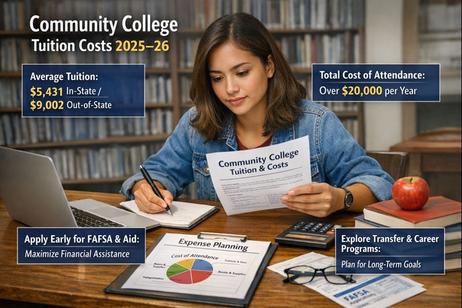
For the 2025–26 academic year, recent data indicate that public community college tuition averages approximately $5,431 per year for in‑state students and $9,002 per year for out‑of‑state students. This reflects slight year‑to‑year increases at many institutions but continues to be significantly lower than tuition at four‑year colleges and universities.

These figures are consistent with broader tuition reporting that places community college tuition in the $5,000–$8,800 range nationally, depending on residency status and institutional policies.

Understanding Tuition Variability by State and Residency

One key characteristic of community college costs is wide state variation. In states like California and New Mexico, in‑district tuition can be as low as $1,440–$2,250 per year, whereas in high‑cost states such as Vermont, published tuition can approach $8,900 annually.

Residency also plays a major role. Students qualifying for in‑district or in‑state tuition pay significantly less than out‑of‑state or out‑district students, who often see tuition costs nearly double the in‑district rate.

As an example, the average tuition

. . .read more

Recent Articles

Test Article, Image and Content
Test Test Test Test Test Test Test Test Test Test Test Test Test Test Test Test Test Test Test Test Test Test Test Test Test Test Test Test Test Test Test Test Test Test Test Test Test Test Test Test Test Test Test Test Test Test Test Test Test Test Test Test Test Test Test Test Test Test Test Test Test Test Test Test Test Test Test Test Test Test Test Test Test Test Test Test Test Test Test Test Test Test Test Test Test Test Test Test Test Test Test Test Test Test Test Test Test Test Test Test Test Test Test Test Test Test Test Test Test Test Test Test Test Test Test Test Test Test Test Test Test Test Test Test Test Test Test Test Test Test Test Test Test Test Test Test Test Test Test Test Test Test Test Test Test Test Test Test Test Test Test Test Test Test Test Test Test Test Test Test Test Test Test Test Test Test Test Test Test Test Test Test Test Test Test Test Test Test Test Test Test Test Test Test
Faith Formation Integrated Across Subject Areas
Explore faith formation integrated across subject areas and its impact on curriculum, student outcomes, and community colleges.
Parish-Based Governance Models in Catholic Schools
Explore parish-based governance models in Catholic schools and their impact on leadership, funding, and community colleges.